Structural damage, without fixing it
by Roy8 min read
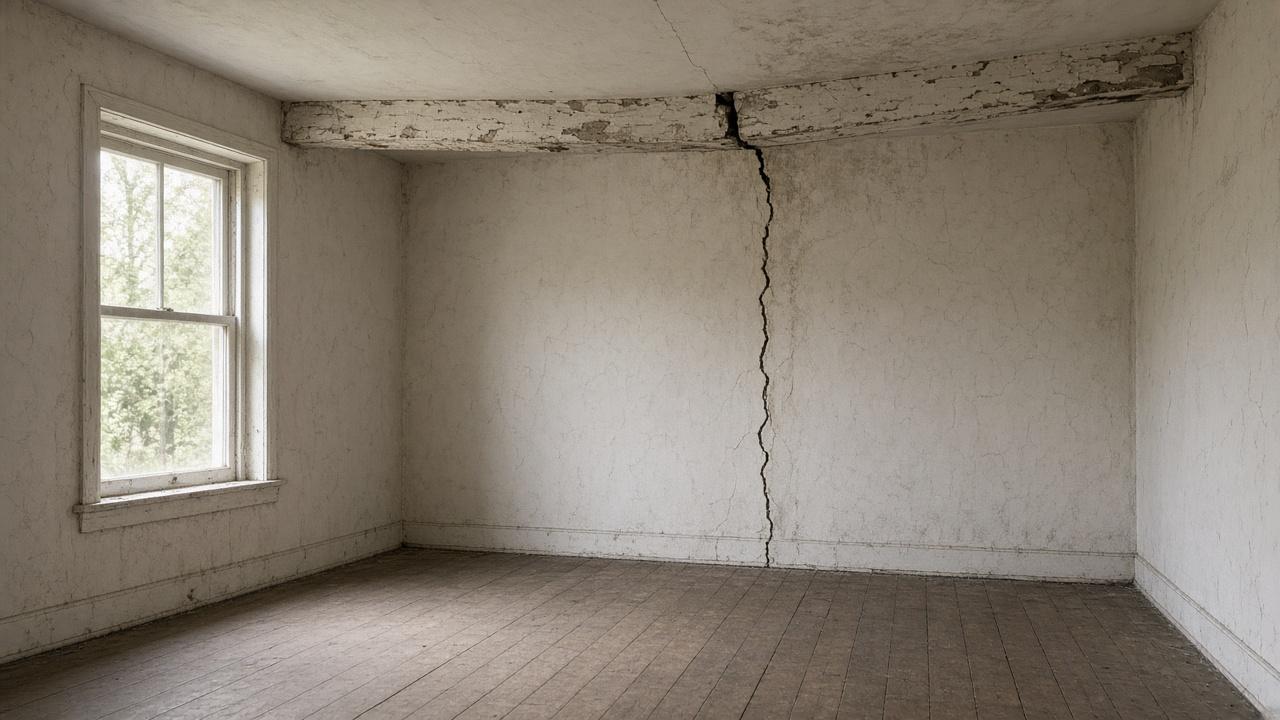
A sloping floor, a crack someone called structural, a roof that sags, a wall that is doing more work than it should. The word makes owners freeze, and it makes financed buyers and their lenders freeze too. You can still sell a house with that kind of damage without rebuilding it first. You should not guess that every crack is structural, and you should not walk under something you have been told is unsafe.
This is general information, not an engineering opinion and not legal advice.
What people mean by it
Structure is the part of the house that holds the house up. Foundation movement, a failed beam, a sagging roof frame, a load-bearing wall that was cut, joists softened by a long leak. A hairline in the plaster can be nothing. A stair-step crack in a foundation wall can be something. The difference is not a blog post. If you have a report, send it. If you only have a worry, say what you see: doors that stick, floors that slope, a gap that grew.
Water often sits underneath the storey people tell. A leak that was ignored becomes a rotten sill. Describe the water too. We price the house we will receive, not the label.
Why a normal listing stalls
A buyer who needs a mortgage asks four things. What will the repair cost. What else is hidden. Will the bank lend. Is it safe to live in. Any one of those can end the deal after you have already waited through showings. Inspectors write the crack up. Lenders step back. You are left with a house that is now publicly a project, and with the carrying cost of the months you spent finding that out.
A cash buyer does not bring that bank. The buyer still has to believe the number. Serious movement, an open order, or a report that says do not occupy will lower the offer. That is the trade. You are not paying for a mystery repair before you know if the mystery is worth solving.
Do not use a sample repair bill
Foundation work, underpinning, a structural roof, floor leveling, and a load-bearing repair are different jobs. They can grow once the walls are open. We will not print dollar ranges and let you treat them as a quote. If you want to know the cost of fixing, hire someone qualified to open what needs opening and write a scope. Compare that scope with a cash offer. If you cannot fund the scope, selling as it is is a real option. Starting the work and stopping is how the house gets harder to sell.
As-is still means you disclose
You do not have to jack the house, pour a wall, or replace a beam to ask for a number. You do have to tell us what you know. A report you disagree with is still a report. A city order about an unsafe structure does not vanish at closing unless the agreement says who takes it. Hiding a crack so a photo looks straight is how sales fall apart later, including sales to us.
Three paths
Fix it with a proper scope, then live there or list it. That can net more if the work is finished and documented. List it as a project and accept that many financed buyers will leave. Or sell to us and let the price carry the uncertainty. None of these is a dare to ignore an order that says stay out.
Permits, if you do repair, belong to that repair. This page is not a permit guide. Your municipality and your contractor handle that path. We are the path that does not require you to open it.
Who else has to live with the decision
Everyone on title signs. If you are in the house, do not agree to a date that leaves you without housing. If a tenant is there, a sale does not automatically end the tenancy, and Ontario and Alberta do not use the same rules. If an engineer has already said a room is unsafe, tell the people sleeping in it and tell us. Insurance may change once they know. Tell them the truth before a loss.
The crack, the slope, the report
- The address and what you see: slope, crack, sag, or a past repair
- Any engineer’s report or city letter
- Whether anyone is living there
- Photos of the area, if you can take them safely
- Whether water was involved
- Who else must sign
Old patches and a second look
A previous owner may have skim-coated a crack, sistered a joist badly, or propped a beam with a post that was never engineered. If you know about a patch, say so. If you only suspect one, say that too. The walk-through is where a guess becomes a price. We would rather change the number before you sign than discover a wall that is not doing its job on the day of closing.
Winter makes some movement look worse and hides other problems under snow. A wet spring and a dry August are not the same house. Tell us the season you noticed it and whether it has grown. A report from five years ago is still worth sending. It is not a promise the house is the same now.
A wall that was opened, and a post that was not
A renovation that cut a wall, or a beam propped on a post nobody engineered, is a different problem from a hairline that has been there for years. If you know which one you have, say so. If two contractors disagree, do not pick the cheaper sentence and call it a diagnosis. Ask whether it is still moving, whether water is involved, and whether a permit would be required if you repaired it. We will not read that permit for you.
New drywall over a moving wall does not stop the movement, and it can become a legal problem if you knew. If someone has told you a room is unsafe, the people sleeping there need that sentence, and so do we. Insurance may change once they know. Tell them before a later storm. A cash sale skips the buyer’s bank that often walks away from this kind of report. It does not skip disclosure, and it does not require you to jack the house before you ask what it is worth as it stands.
Sell it without jacking the house
We buy houses with foundation and framing problems in Ontario and Alberta. You do not have to repair them to get an offer. There is no listing commission from you and no buyer’s bank. The offer is in writing. Your lawyer reads it. You can refuse it. If the damage is worse than the photos, the number changes before you sign, not after. We will not promise a number of days, and we will not pay your legal bill.
Insurance and the next storm
Once you know a beam or a foundation is moving, tell the insurer what you know. A later claim on a problem you kept quiet can be denied. Keeping coverage in force while you decide is part of owning the house, not part of the repair. If they cancel, say so. An uninsured house with a structural question is a different offer from an insured one.
A retail buyer’s inspection will find the same slope you already see, and then ask for a credit you may not want to give. That loop is the months a cash sale skips. It is not a guarantee our number beats a patient listing of a house you fully repair. Compare a real scope, if you get one, with the offer. Then choose.
Describe it before you label it
Doors that stick, a floor that slopes, a gap that grew, and a leak that was ignored are more useful than the word structural. A report you disagree with is still worth sending. A report from several years ago is not a promise the house is the same after another winter. If you are living there and nobody has told you to leave, you can keep living there while you compare a scope with an offer. If someone has told you to leave, follow that. The blog is not the person who makes that call. Send the photos if you can take them safely.
A blog is not an engineer
Can you sell without fixing it? Yes, with disclosure, if title can move. Will a bank’s buyer take it? Often no. That is why the cash path exists. Should you get an engineer first? If you are choosing between a big repair and a sale, a real scope helps you choose. You do not need one for us to start. What if you are not sure it is structural? Describe it. We would rather see a harmless crack than price a fantasy. Is the offer the cheque? No. The mortgage and the usual adjustments come off the price.