After a municipal order
by Roy8 min read
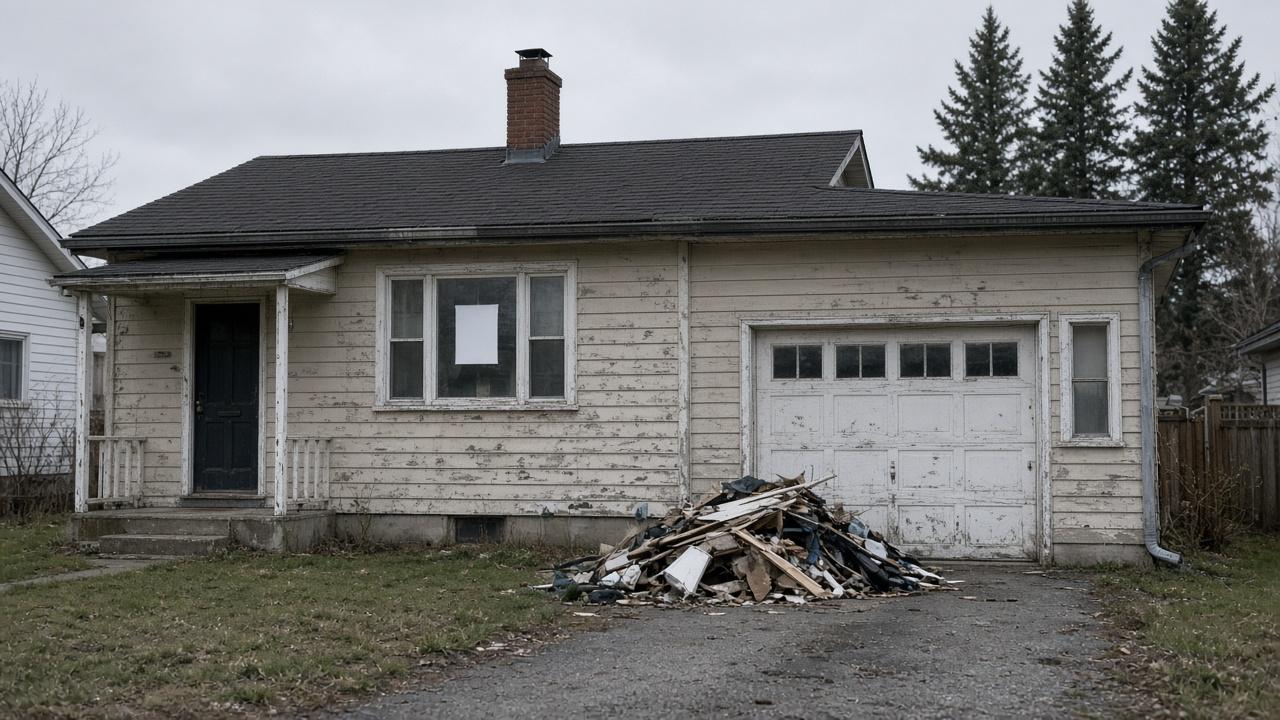
A letter from the municipality puts a deadline on the house. It might be an unsafe deck, a yard complaint, a damaged roof, an apartment that was never approved, or work done without a permit. It can ask for repairs, a cleanup, permits, or inspections.
You can often still sell. The order does not vanish because you want to move. It has to be read, disclosed when it should be, and dealt with in the agreement, at closing, or by work the municipality accepts. Orders are not all the same. Long grass is not a collapsing wall.
This is general information, not legal advice. Municipal practice differs across Ontario. Your lawyer and the office that issued the letter are the ones who can speak to your file.
Put the file in one place
- Every page of the order, plus inspection reports and photos
- Estimates, permits, renovation records, and any survey or engineer’s letter
- Emails, call notes, deadlines, and receipts for work already done
- The name, department, and number of the person at the municipality
That folder is what you hand a lawyer or a buyer. Weeks of phone calls are useless if nobody can find the deadline.
What the letter actually is
A municipal order tells an owner or occupant to correct a property problem. It may come from property standards, a building inspector, the chief building official, by-law enforcement, the fire department, or public health. Ontario’s Building Code Act lets municipalities pass property standards by-laws and enforce them. Building officials also enforce the Building Code.
The title matters. You might have an order to comply, a property standards order, an unsafe building order, an emergency order, a cleanup order, a zoning notice, or an order about work without a permit. Read the heading and the law it cites. Do not treat them as interchangeable.
| Issue | Typical concern | What it can do to a sale |
|---|---|---|
| Yard maintenance | Grass, debris, weeds, waste | Often limited once it is corrected |
| Worn exterior | Stairs, siding, peeling surfaces | Buyers may lose interest |
| Unsafe structure | Deck, porch, roof, wall, foundation | Access and financing can stop |
| Work without permits | Basement, addition, deck, mechanical work | Plans and inspections may be required |
| Unapproved use | A unit or a use the zoning does not allow | The rental story buyers imagined may be wrong |
| Fire safety | Exits, alarms, separation | The work can be urgent |
| Cleanup | Garbage, vehicles, stored material, pests | Showings get harder |
| Demolition | The structure is considered unsafe | A legal and money problem, not a paint problem |
Read the whole order
Look for the address, who is named, the date, the by-law, each violation, the work required, the deadline, how to appeal, which inspections are required, and what happens if you do nothing. Posted orders are not yours to hide or pull down. If a sentence is unclear, call the office and follow up in writing.
- What exactly has to change
- Whether the deadline moves if you ask
- Whether you need permits, drawings, or an engineer
- Whether the house can be sold while the order is open
- What closes the file
Deadlines and appeals
A phone call does not extend a deadline unless they say so. Some property standards orders can be appealed to a local committee, and the window can be short. Talk to a lawyer quickly if the work is already done, the wrong person was named, the description is wrong, the remedy is larger than the problem, or the deadline cannot be met. Selling does not revive an appeal you missed.
Is it on title?
Ask your lawyer and the municipality whether the order is registered or will show up in a title search. A buyer’s lawyer may want it removed, accepted in writing, or handled in the closing documents. Do not promise it disappears at closing. Closing the file can mean finished work, a final inspection, charges paid, and a compliance letter. The steps depend on the city and the kind of order.
Is the house safe to enter?
Do not send buyers or contractors into an area marked unsafe. Stairs, decks, fire damage, open wiring, a moving foundation, falling masonry, an unsupported ceiling, sewage, or heavy mould can be the reason for the order. If it says to vacate or secure the building, do that. You still own the safety problem until the transfer.
Three paths
Finish the work first when it is small, permitted, and you can pay for it before the deadline. Negotiate time when the order allows a review and you are actually doing the work. Sell as-is when the work is large, unpermitted, or slower than the date you need. Fairclose can offer while the order is open. The agreement has to say who takes the remaining work. Cash does not erase the municipality.
What buyers and insurers do
A financed buyer may walk, or their lender may refuse, when an order is open, a unit is illegal, or permits were never closed. Insurers may hesitate if the order says the house is unsafe or vacant. The buyer’s lawyer will often see the order anyway. Hiding a posted notice is a bad plan and may be forbidden.
Unpermitted work and extra units
A basement apartment, an addition, or mechanical work done without a permit can be the whole file. You can sometimes sell the house. You should not advertise an unapproved unit as legal rent. Tell us what was built, and let your lawyer describe it. Cosmetic paint does not close a permit.
Do not spend until you know the number
One or two estimates are useful. A new kitchen is not. Stop anything that is getting worse, and compare the cost of finishing the order plus a listing with a cash offer on the house as it sits. We will not invent a sample sale price. Your estimates are the ones that matter.
What to hand over
- The full order and any appeal or extension
- Who issued it, and whether it is registered
- Permits, plans, and engineering you already have
- Fines or charges
- What is unsafe, and whether anyone still lives there
Ask the municipality, in writing, whether a buyer can assume the work and what closes the file. Ask a buyer whether their offer is conditional on the order being cleared. Fairclose’s offer should say that plainly.
Fines, tenants, and a posted notice
An order to repair and an order to leave are not the same sentence. Read which one you have, and whether a fine keeps growing while you argue about a kitchen. A tenant does not vanish because the city wrote you. Ontario and Alberta do not use the same rules, and a municipal letter is not a notice you can copy onto a form. Say who is still inside. Do not take a posted order down unless the office that put it up says you may. Hiding it from a buyer is a bad plan and may be forbidden.
Cities do not share one rulebook. An order in one municipality is not instructions for a house in another, and a note about Ontario property standards should not be pasted onto an Alberta file. Ask that office, in writing, whether a buyer can take the remaining work and what actually closes the file. An appeal, if one exists, has a window. Only a lawyer should tell you whether to use it. Fairclose can look while the order is open. The agreement has to say who finishes what is left. Cash does not erase the municipality, and a transfer does not automatically close the file. A fine that keeps growing is part of the carrying cost. Put it next to the repair estimate before you decide the cash number is too low. If people are still living there, do not promise the house will be empty on a day you cannot deliver. An open permit and an illegal unit are part of the same honesty. Do not advertise either as finished. Paint does not close a file the city still has open. Bring the order itself, not a summary from memory.
Orders, deadlines, and a transfer
Can you list with an open order? Often yes. You still have to disclose it, and a mortgage may not fund. Do you have to finish every repair first? Not always. Will the order follow the house? It can, until the municipality closes it. Do not assume a transfer clears it.
Can they extend the deadline? Sometimes, if you ask the right office and they agree. Should you appeal? Only with a lawyer, and only inside the window. Can you take down a posted order? No, not unless they authorize it. If you cannot afford the work, a sale that assigns the remaining work can be the practical path. Your lawyer has to paper that.
Send Fairclose the order with the address. We can look while it is open. Closing is a date your lawyer can actually use, not a date that pretends the city is finished.