Serious electrical problems, sold as-is
by Roy13 min read
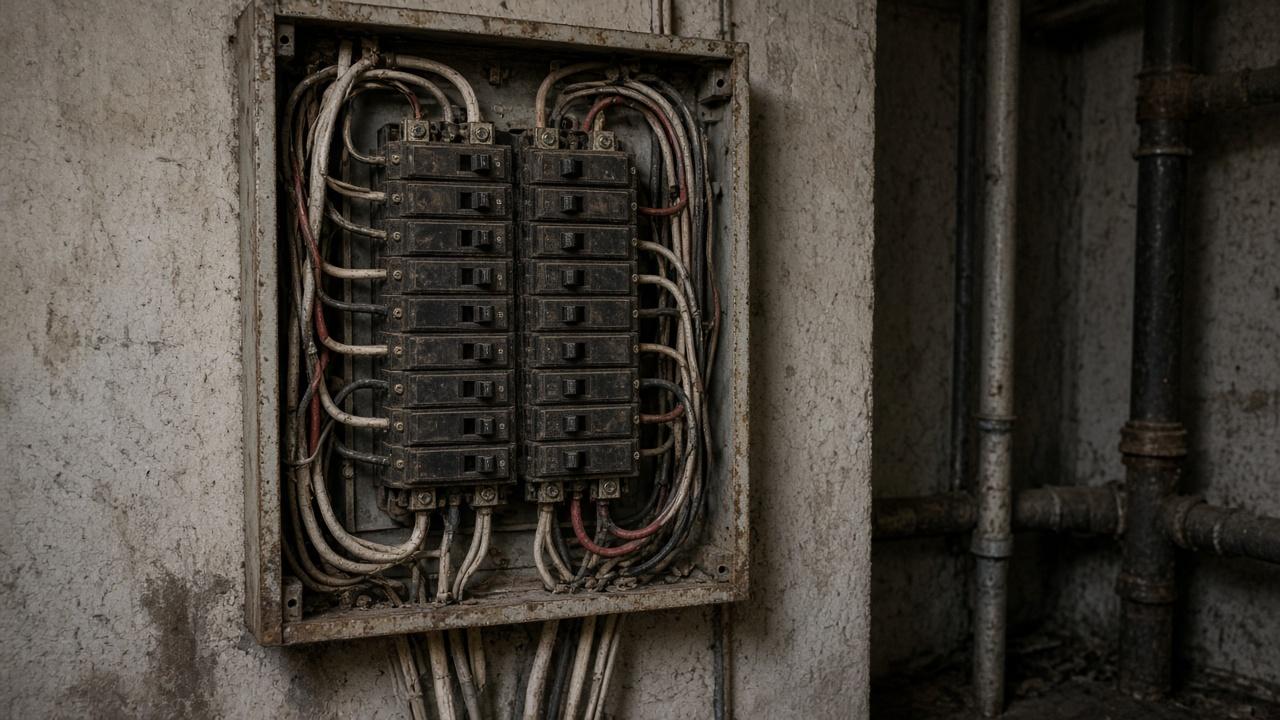
A light flickers when the furnace starts. One outlet is warm. Breakers trip without a clear reason, and half the basement has been running through an extension cord for years. Then an electrician looks and the quote arrives: a new panel, a lot of rewiring, unsafe splices, or work that was never inspected.
If you were already thinking about selling, that quote can make the house feel stuck. You can often sell a house with serious electrical problems in Ontario. You do not always have to rewire it first. What you cannot do is hide a hazard. The condition can change the price, a buyer’s mortgage, insurance, the inspection, and the words in the agreement.
This is general information, not electrical advice and not legal advice. A licensed electrical contractor and your own lawyer are the people who can speak to your house.
Deal with a live hazard before you think about the sale
Photos and closing dates wait. If the house is unsafe, that comes first. Turn off the affected circuit and call a licensed electrical contractor if you notice any of these:
- Smoke, a burning smell, or melting plastic
- Sparks, or buzzing and crackling inside a wall
- A scorched outlet, a warm panel, or a shock from a switch
- Breakers that trip again as soon as you reset them
- Exposed live wiring, or water near a panel or outlet
- Damaged wires from the utility, or a panel hit by fire or a flood
Do not take the panel cover off, touch bare conductors, or try to fix a serious defect yourself. If there is a fire, leave and call emergency services. A buyer cannot inspect a house that is an active shock or fire risk.
Not every electrical defect is the same size
A missing cover plate is a small job. An overloaded service, or a house full of wiring nobody inspected, is a different sale. Older Ontario houses often mix original wiring, a later renovation, and repairs done by different people over decades.
| Electrical problem | Main concern | Possible effect on the sale |
|---|---|---|
| Frequently tripping breakers | Overload, a fault, or damaged equipment | Buyer may ask for an investigation |
| Knob-and-tube wiring | Older ungrounded wiring | Insurance and financing concerns |
| Aluminum branch wiring | Connections and how the wire is terminated | May need an inspection or repairs |
| Fuse panel | Limited capacity or outdated equipment | Buyers may expect an upgrade |
| Damaged electrical panel | Fire, shock, or reliability | A major repair may be required |
| Unapproved renovation wiring | Unknown workmanship and missing records | Inspection and correction may be needed |
| Exposed conductors | Immediate safety concern | Can discourage traditional buyers |
| Overloaded circuits | Heat and fire risk | May require new circuits |
| Double-tapped breakers | Improper connections in some panels | An electrician should review them |
| Water-damaged wiring | Corrosion and hidden damage | May affect insurance |
| Undersized electrical service | Limited capacity for modern use | Buyer may want a service upgrade |
| Improper grounding or bonding | Shock and equipment risk | Correction may be required |
A serious problem is one that can hurt someone, stop the house being used normally, block insurance, or take substantial work to correct. That includes active arcing, burned wiring, a damaged main panel, knob-and-tube in poor condition, aluminum wiring that was modified badly, unapproved basement wiring, missing grounding, open junctions, water at the equipment, fire-damaged wiring, and an open Electrical Safety Authority file that still lists defects.
In Ontario, the Electrical Safety Authority administers the Ontario Electrical Safety Code. New electrical work, alterations, and repairs have to follow the rules that apply to that work. An older house does not have to be rebuilt to every current requirement just because it is being sold.
Yes, you can often sell it
Houses that need electrical work change hands all the time. The more dangerous or uncertain the wiring is, the fewer traditional buyers will stay in the deal. A buyer who needs a mortgage has less room than a cash buyer. Even if the buyer is willing, the lender or the insurer may not be.
The practical choices are to fix only the immediate hazards, do the major work and then list, list the house as it is and price the work in, or sell to a cash buyer who does the work after closing. Which one fits depends on the danger, the repair cost, the money you have, and how soon you need to be done.
Fix only what is dangerous
You can make the house safer without rewiring every room. That might mean replacing burned receptacles, closing open junction boxes, correcting a dangerous connection in the panel, isolating a damaged circuit, or replacing a breaker that has failed. Ask the electrician to separate immediate hazards from upgrades they would recommend. The larger modernization can stay for the next owner.
Repair it all, then list
A full repair can make sense when you can pay for it, the house is otherwise ready for an owner-occupant, you have time, and the electrical problem is the main thing standing between you and a traditional sale. A finished, inspected system can widen the buyer pool and calm an insurer.
The risk is what the walls hide. Once they are open, the electrician may find damaged cable, crowded boxes, or splices that cannot stay. The electrical quote often leaves out the drywall, plaster, paint, and trim that follow. Ask what is included before you accept a number. Carrying costs keep running while you wait for the contractor, the inspection, and the patching.
List it as it is
You can list a house with serious electrical problems and say, in plain words, that the price reflects the work. Renovators and buyers who plan a larger project may look. The sale can still carry long conditions for inspection, insurance, financing, and the lawyers. After their electrician reports, the buyer may ask for another cut. A general home inspector is not a substitute for a licensed electrical contractor. Once the inspection says “have an electrician review this,” a financed deal often pauses.
Sell to a cash buyer
A direct sale is the practical path when you cannot fund the repairs, the house needs rewiring, you have to move, the property has been empty, you inherited an older house, fire or water reached the wiring, there is an open electrical file, or earlier work was never inspected. It is also the path when a traditional buyer cannot get insurance.
Fairclose buys houses in Ontario and Alberta in that condition, including aging panels, unfinished renovations, and wiring that has to be redone. We buy as principal. There is no listing commission from you. The offer prices the electrical work. You do not complete it first. Your lawyer reviews the agreement, and you pick the closing date once title can move.
Why a normal buyer hesitates
Most of the system is hidden. A buyer can see a worn floor. They cannot see the cable above the ceiling. One scorched outlet makes them wonder what else is behind the drywall. They will ask whether a licensed contractor did the work, whether it was inspected, whether there is a Certificate of Acceptance, whether knob-and-tube or aluminum is still in use, whether the panel is large enough, and whether a lender will fund the mortgage. Uncertainty becomes a lower offer. Paper you already have, and a written report, removes some of that guesswork.
Knob-and-tube
Knob-and-tube was common from the early 1900s into the 1940s. It is ungrounded, and some insurers will not cover it or will require replacement. That does not mean every house that still has some of it is about to catch fire. The usual worries are age, cracked insulation, splices done badly, circuits asked to carry more than they were built for, wiring buried in insulation, and damage from later renovations.
Do not assume every visible piece has to come out before you get a price. Have a licensed contractor say what is actually there. If you sell without replacing it, say what you know. Expect insurance questions.
Aluminum wiring
Aluminum branch wiring shows up in many houses from the 1960s and 1970s. The metal by itself is not an order to rewire the house. The Electrical Safety Authority has said aluminum wiring can be acceptable when the devices and connections are approved for it. Trouble shows up when copper-only devices are put on aluminum conductors, connections loosen, or someone unfamiliar with aluminum did the repair.
Some insurers want an inspection, repairs, or a Certificate of Acceptance before they will cover the house. Ask the electrician and the insurer what they actually require before you pay for a full rewire.
Fuse panels and a small service
A fuse panel is not defective just because it uses fuses. Older equipment still raises practical problems: limited capacity, fuses that are too large, missing covers, parts you cannot buy, and additions that were never meant for that box. A 60-amp service can struggle with the way a house is used now.
A service upgrade is often more than a new panel. It can mean the utility, a meter base, new service conductors, grounding, circuit repairs, and another inspection. Get that in writing before anyone tells a buyer the upgrade will be simple.
Work that was never inspected
Basements, kitchens, garages, and additions are where unapproved wiring turns up. Loose conductors, open boxes, a handful of new breakers in an old panel, an extension cord buried in a wall, and a switch that runs something you did not expect are the usual signs.
In Ontario, most new electrical installations and alterations need an ESA notification, which people still call a permit. Inspected work that passes can receive a Certificate of Acceptance. Do not hire someone to close unsafe work behind drywall so it will not be seen at a sale. In Alberta the permit path is not the ESA. A licensed contractor there files with the authority that covers that municipality.
For most owners, the sound approach is a licensed electrical contractor who will file the notification, include the inspection, and tell you which defects are in the price, whether walls have to open, who patches them, and whether you will receive the acceptance certificate. Be wary of anyone who says paperwork is unnecessary, or that you should say the previous owner did the work.
An open file can stay with the house
In Ontario, an open ESA notification can follow the property. A buyer can become the person responsible for defects that were never closed. Before anyone signs, the lawyers should see which work was inspected, which defects remain, who will finish them, and what that is expected to cost. Do not leave it as a handshake.
Keep estimates, contracts, notification numbers, inspection reports, certificates, the panel schedule, and photos from before the walls were closed. Paper does not guarantee a higher price. It does make a buyer less nervous.
Insurance is often the thing that stops closing
A willing buyer is not a closed sale. Lenders usually want proof the house can be insured. An insurer may hesitate over knob-and-tube, uncorrected aluminum connections, a fuse panel, a service that is too small, an open ESA file, fire or water damage, unapproved renovations, or a house that has been vacant. Some will cover it with conditions. Some will require repairs before the closing date. Ask a financed buyer to check insurance early, not the week of closing.
A cash buyer does not need a mortgage approval. The house still has to be safe enough to own, and insurance still matters after closing. The price reflects that.
What to tell a buyer
Known serious problems should not be hidden. Talk to an Ontario real estate lawyer about what your sale requires. The facts that usually matter are an active hazard, fire or water damage, an open ESA file, knob-and-tube or aluminum you know about, renovations that were never inspected, repeated trips, burned outlets, a circuit that is disconnected, an unsafe panel, and any report that recommends major work.
Do not say the system is safe unless a qualified person has said so. Do not exaggerate a problem you do not understand. Hand over the documents and let the electrician explain them.
Repair, or sell as it is
Repairing first fits when you can pay without taking on expensive debt, the estimate is clear, the rest of the house is ready, you can wait, the work can be inspected, and the extra buyers are likely to be worth the cost and the months of carrying costs.
Selling as it is fits when you cannot fund the repair, the house needs other work too, you need to move, it is vacant or inherited, insurance is getting difficult, you do not want every wall opened, or a previous listing already failed. A higher sale price is not the same as more money left after repairs, wall restoration, commission, and the bills you pay while you wait. Put a real repair estimate next to a cash offer and compare what you would actually keep, after the mortgage.
If you sell as it is
- Have a qualified contractor disconnect or make safe anything that is an immediate hazard.
- Gather invoices, ESA papers, reports, the panel schedule, and photos.
- Find out whether an electrical notification is still open.
- Get at least one written estimate, even if you will not do the work. It tells you what the price has to absorb.
- Add the mortgage, tax, insurance, and utilities for however long a repair and a listing would take.
- Have your lawyer read the electrical issues and the agreement before you sign.
What to ask us
Before you accept a Fairclose offer, the answers should be in the paper, not only on the phone. We buy the house ourselves. The offer is not conditional on a buyer’s mortgage. If we have seen an electrical report, we will say so. You do not complete the rewire for us. There is no commission from you. Your lawyer can review the agreement. You choose the closing date once title can transfer. Open ESA items should be described in that agreement, not left as a promise.
Knob-and-tube, panels, and a sale
Can you sell with knob-and-tube still in the house? Often, yes. Some insurers will want it inspected or replaced, so the buyer pool is smaller.
Does aluminum wiring always have to be replaced? No. Proper devices and connections can be enough. An assessment tells you which corrections are actually required.
Can you sell with a fuse panel? Yes. Buyers and insurers will still look at its condition and how much power it can supply.
Will a lender finance electrical defects? It depends on the defect, the insurer, the appraisal, and the lender. A safety or insurance problem can stop the mortgage.
Can a house with no working power still be sold for cash? Sometimes. The cost to restore service is part of the offer. Tell us if the power is off.
What happens to an open ESA file? In Ontario it can become the buyer’s responsibility. Both lawyers should see it before closing.
You do not have to rebuild the whole house to sell it
Make the immediate hazards safe. Find out what wiring is there. Check for an open file. Get one written estimate. Then compare the cost of doing the work with what you would keep if you sold the house as it sits.
Repairing before a listing can bring more buyers. It also takes money and time, and a financed sale can still stall on insurance. A cash sale prices the electrical work in, and you are not the one paying for the rewire, the wall repairs, a commission, and months of carrying costs. If you want a number on the house you have, send the address.