A collapsed septic system
by Roy10 min read
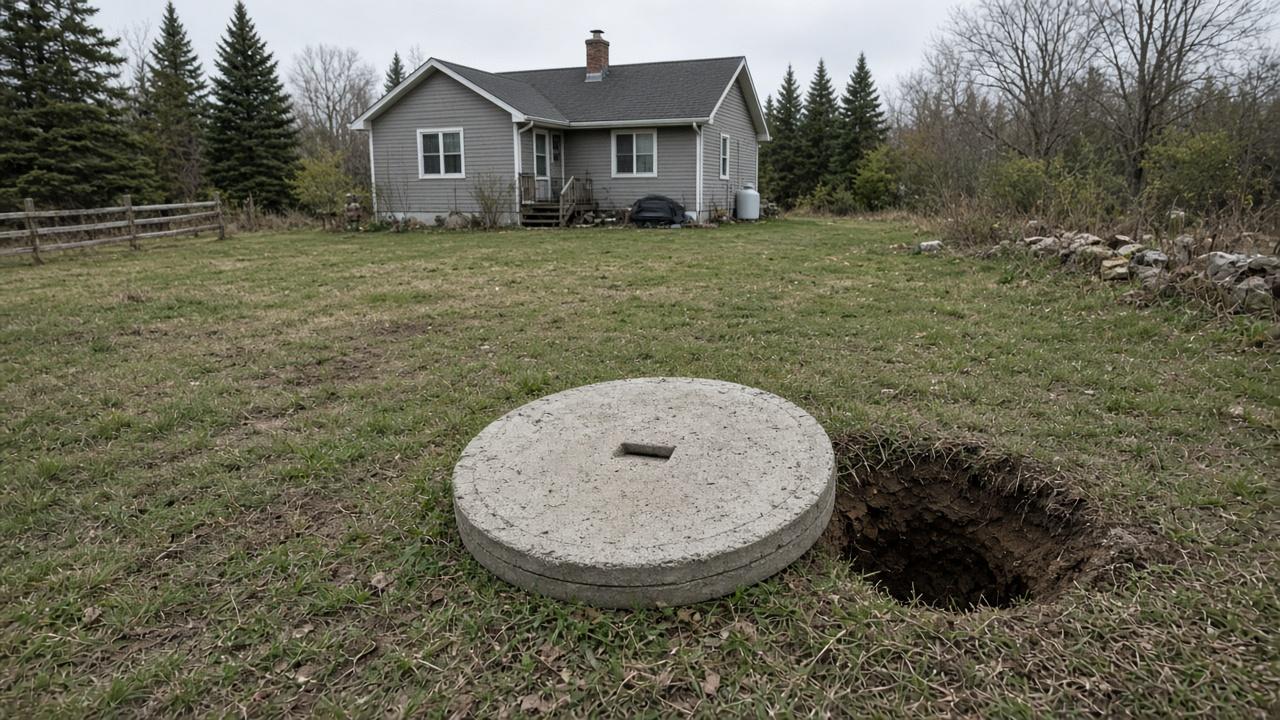
The yard smells off. The toilets are slow. A wet patch sits over the bed even when it has not rained, and a contractor says the tank is damaged or the system has failed. A replacement can mean a soil test, a design, a permit, excavation, and inspections, and the full bill often is not clear until someone starts digging.
A collapsed septic system makes a rural house harder to live in, finance, insure, and sell. It does not make the house impossible to sell. You can repair it and then list, list it with the failure disclosed, or sell as-is to a buyer who takes the work after closing. The better path depends on cash, the lot, the local approval, and how soon you need to move.
This is general information, not legal advice and not advice from a septic installer. Ontario owners are responsible for the private system on their property. A typical system uses a tank, pipes, soil, and organisms in that soil to collect and treat household wastewater. Who enforces the rules depends on the address. Ask before you assume it is the township office.
Stop the mess before you think about the price
Household wastewater should not pool on the ground, reach a ditch or a lake, or back up into the house. Until a qualified installer has looked, use as little water as you can.
- Cut water use, and stop using fixtures that are backing up
- Keep children and pets off wet or contaminated ground
- Do not drive or set heavy equipment on the tank or the bed
- Call a qualified septic installer
- Photograph the damage before anyone cleans it up
- Tell your insurer if sewage entered the house
- Ask who approves septic systems for this address, and keep every report
- Talk to your real estate lawyer before you sign a sale
Do not stand on a lid that is sinking. Older concrete, steel, or improvised tanks can fail without much warning.
“Collapsed” can mean several different failures
The tank may have cracked or caved in. A pipe in or out of the tank may have collapsed. The distribution box may have failed. Lines in the leaching bed may be broken, shifted, or blocked. Or the soil may no longer take the wastewater. Those are not the same repair. Get a written assessment that names the failed part before you decide how to sell.
| Part | What it does | What can go wrong |
|---|---|---|
| Building sewer | Carries wastewater out of the house | Cracks, roots, shifting, a blockage |
| Septic tank | Separates solids, scum, and liquid | Cracks, collapse, corrosion, leaks |
| Baffles or tees | Direct flow through the tank | Breakage or a blockage |
| Distribution box | Splits flow across the bed | Tilting, cracking, uneven flow |
| Leaching bed | Treats and disperses the liquid in soil | Saturation, clogging, crushing, poor drainage |
| Pumps and alarms | Move or monitor wastewater on some systems | Electrical or mechanical failure |
| Soil treatment area | Finishes the treatment | Compaction, high groundwater, unsuitable soil |
A damaged pipe can sometimes be repaired without a whole new system. A collapsed tank or a failed bed is a much larger job.
Warning signs
- Sewage backing into the house, or several drains slow at once
- Gurgling toilets, or toilets that will not flush normally
- A strong sewage smell
- Standing water, spongy soil, or unusually green grass over the bed
- Wastewater on the surface, or flowing toward a ditch, lake, or a neighbour
- Alarms, a dip in the ground over the tank, or damage found while pumping
- Emergency pump-outs that keep getting closer together
One slow sink is often a plumbing problem inside the house. Several slow fixtures plus wet ground or a sewage smell point at the septic system.
Why systems fail
Tanks, pipes, and beds wear out. Cars, trucks, and equipment can crush lines that look like solid lawn. Roots enter cracked joints. Leaking toilets, heavy laundry, and surface water aimed at the bed can overload it. Solids that were never pumped can leave the tank and clog the bed, and pumping will not undo that. High groundwater, a bad install, or a house that gained bedrooms, a rental unit, or year-round use can push the system past what it was built for.
Who handles the rules in Ontario
Ontario’s Building Code covers many on-site sewage systems. In a lot of places the municipality enforces it. In others it is a health unit, a conservation authority, or an upper-tier municipality. Some systems need a Building Code permit. Others, depending on size and use, follow a different approval. Do not guess. Call the local building department and ask who handles septic permits for your exact address.
Yes, you can often sell it
A failed system should not be hidden, and “it needs a little work” is not enough when the tank or the bed has failed. The sale turns on whether sewage is backing up or surfacing, whether anyone can still live there, whether an order exists, whether a replacement can be approved on the lot, and whether the buyer needs a mortgage and insurance. Give them the reports, estimates, pump-out receipts, permit records, and letters you already have.
Three ways to sell
Repair first when you can pay for it, the lot can take an approved replacement, contractors can do it in your time, and the higher price is worth the uncertainty. The first estimate often leaves out design, soil tests, trees, a hard dig, permits, and putting the yard and driveway back.
List it disclosed when the location is desirable, the rest of the house is sound, you have a report, and local buyers understand private systems. Expect conditions, inspections, and a buyer who may demand a large cut or a new system before closing. Their lender may still refuse.
Sell as-is when the system has failed, sewage is backing up, you cannot fund a replacement, the house needs other work, it is vacant or inherited, there is an order, or you do not want to run contractors. Fairclose buys as principal. The offer prices the system. You do not build the new one first.
There is no single replacement price
Cost depends on the system, the soil, the lot, the water table, the slope, access, how many bedrooms the house is treated as, setbacks from wells and water, and what the local authority requires. A waterfront lot, poor soil, or tight access can cost much more than a straightforward bed. Get a written quote for this lot. Do not budget from a number you saw online.
A new tank is not a new system. If solids have already reached the bed, or the soil will not take liquid, a new tank can still discharge into a failed treatment area. Ask whether the bed was assessed, whether lines work, whether the building sewer is damaged, whether the system is sized for the house, and whether the authority will approve a partial repair. A cheap repair that fails inspection is not a bargain.
The lot can be the harder problem
- A small lot, a high water table, or bedrock close to the surface
- Poor soil, a steep slope, or no room for a new bed
- Wells, shoreline setbacks, or wetlands
- Buildings, a neighbour’s line, or equipment that cannot get in
A system that already exists does not prove a replacement will be approved. Ask the authority whether a soil test, a survey, or a design is required before anyone spends heavily on the assumption that it will fit.
Cottages and waterfront
Lakes and rivers add smaller lots, older systems, seasonal access, steep ground, high groundwater, and shoreline limits. Buyers may still want the location. They will want the original permit if you have it, a sketch, pumping records, the bedroom count, well location, and any letter from the authority. If it cannot be replaced where it sits, that is a design question for a qualified installer, not a guess in the listing.
If an order arrives
A serious failure can bring an order to stop using the system, pump it, keep sewage off the surface, secure the area, apply for a permit, replace parts, or leave. Read the deadline. Ask, in writing if you can, whether the house can stay occupied, whether it can be sold before the work is done, whether a buyer can take the remaining work, whether the order is registered, and what closes the file.
Financing is often the wall
A buyer can love the house and still lose the mortgage if drains do not work, sewage is on the ground, an order is open, or replacement approval is uncertain. A financing condition can burn weeks and then die. A cash sale does not wait on that buyer’s bank. Insurance can be a separate problem if sewage entered the house.
Pumping is not a repair
A pump-out can ease a backup and let someone see inside the tank. It does not fix a collapsed tank, broken lines, a clogged bed, high groundwater, or a system that is too small. If you are pumping every few days to stay in the house, that cost belongs in the decision to repair or sell.
Compare the net, not the sticker price
A repaired listing can show a higher price and still net less once you subtract the replacement, the yard, commission, months of mortgage, tax, insurance, heat, and pump-outs. A cash offer is lower on purpose because the work stays with the house. Put your own estimates beside both paths. We will not invent a sample sale price for you.
What to say
Say when it started, whether sewage came indoors, what was pumped, what the contractor wrote, and whether an order or a claim exists. Hand over the report instead of softening it. Your lawyer should look at what this sale has to disclose and how the agreement assigns the remaining work.
- Permits, sketches, and pumping records
- Inspection reports and written estimates
- Orders and emails with the authority
- Insurance letters, if sewage entered the house
- Bedroom count, well location, and any survey you have
Questions worth asking
Ask an installer which part failed, whether the bed can be reused, whether the lot can take a replacement, what the authority has to approve, and what the quote leaves out. Ask a cash buyer whether the offer assumes the system is failed, who handles an open order after closing, and what happens if the house is vacant or still occupied.
A short way to choose
- If sewage is inside or on the ground, deal with that before any showing
- If a repair is clear, approved, and you can pay for it, listing after the repair can make sense
- If approval is uncertain or you would need expensive debt to dig, get a cash number before you start
- If you need to be out in weeks, a listing that depends on a mortgage is a gamble
Do not hide the failure, do not dump wastewater, and do not start a renovation on top of a system you already know is done. Fairclose buys houses with failed septic systems in Ontario, including rural and cottage properties. Send the address, photos of the yard, and any letter you already have. Your lawyer reviews the agreement, and you pick the closing date once title can move.
A failed bed, and whether you dig
Can you sell with a failed system? Often, yes, if you do not hide it. Does it have to pass an inspection first? Not always. A lender may require that. A cash buyer may not.
Can you sell without replacing the bed? Yes. The price should assume the bed is part of the problem, not a surprise. Can you keep living there? Only if it is safe and no order says otherwise. Pumping may buy time. It is not a fix.
Who issues the permit? Whoever handles on-site sewage for that address. Ask the building department to point you there. Can the replacement be paid from the sale? On a cash sale you usually do not pay for it at all. The offer is net of the work. If the lot has no room for a new bed, say so. That changes the price more than the tank does.